
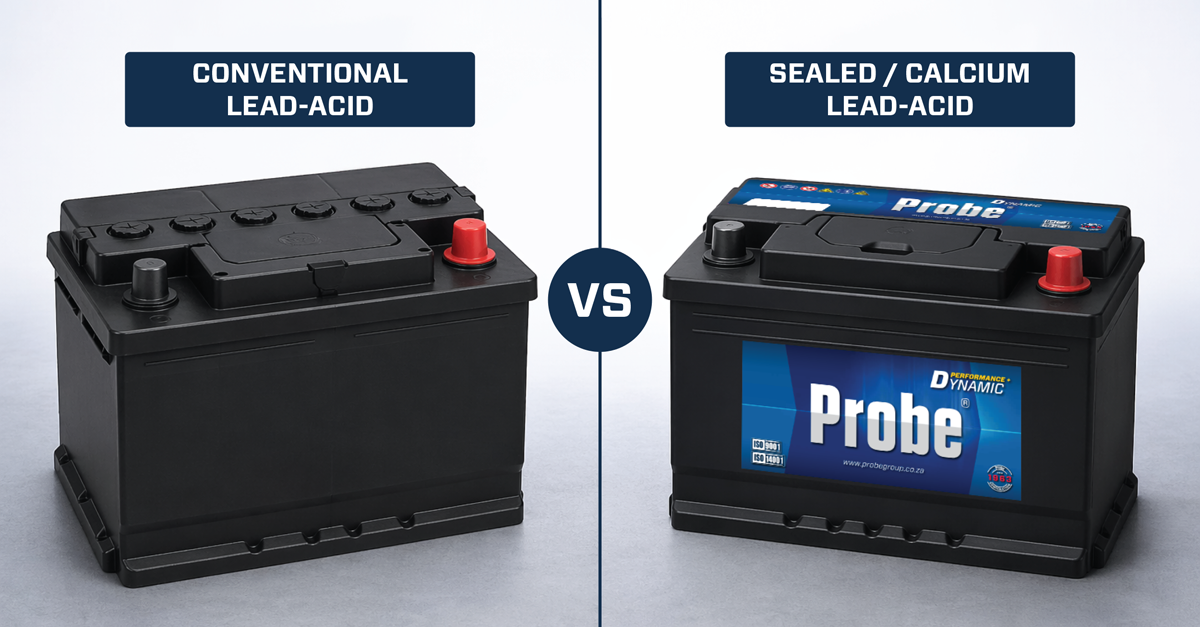
In the South African automotive market, the battery remains one of the most critical yet often overlooked components of a vehicle. While many motorists only consider their battery when it fails, understanding the underlying technology can significantly improve vehicle reliability, reduce unexpected breakdowns, and ensure better value over time.
In this first instalment of our series on automotive battery technologies, we explore the two most common entry-level automotive battery technologies: conventional flooded batteries and calcium (maintenance-free) batteries. Both are widely available and suitable for standard vehicles, but key differences in design and performance can influence which option is best suited to your needs.
Conventional Flooded Batteries
Conventional flooded batteries, also known as wet-cell batteries, are the traditional automotive battery technology that has powered vehicles for decades. They use a liquid electrolyte solution of sulphuric acid and water to facilitate the chemical reaction that generates electricity.
Key characteristics:
- Proven Technology: Conventional batteries are well understood and have a long track record of reliable performance in standard vehicles.
- Lower Upfront Cost: They are typically the most affordable option on the market, making them attractive for budget-conscious motorists.
- Serviceable Design: Many conventional batteries allow for maintenance, such as topping up electrolyte levels when necessary.
Limitations:
- Higher Maintenance Requirements: Regular inspection and maintenance may be required to ensure optimal performance.
- Water Loss Over Time: Evaporation can reduce electrolyte levels, particularly in high-temperature environments.
- Shorter Lifespan: Compared to newer technologies, conventional batteries generally offer fewer charge cycles and reduced durability.
In the South African context, where temperatures can be high and driving conditions demanding, these limitations can impact long-term reliability if the battery is not properly maintained.
Calcium (Maintenance-Free) Batteries
Calcium batteries are an evolution of conventional lead-acid technology. By incorporating calcium into the battery plates, manufacturers have significantly improved performance and reduced many of the maintenance challenges associated with traditional designs.
Key characteristics:
- Maintenance-Free Operation: Calcium batteries are sealed and do not require topping up of electrolyte levels under normal operating conditions.
- Reduced Water Loss: The calcium alloy reduces evaporation, making the battery more stable in high-temperature environments.
- Improved Lifespan: These batteries typically last longer than conventional flooded batteries when used under similar conditions.
- Better Corrosion Resistance: Enhanced plate composition improves durability and reliability.
Limitations:
- Slightly Higher Cost: While still affordable, calcium batteries are generally more expensive than conventional options.
- Sensitivity to Deep Discharge: They are less tolerant of deep discharges, meaning repeated draining can shorten lifespan.
Conventional vs Calcium: A practical comparison
For most South African motorists, the choice between conventional and calcium batteries comes down to balancing cost, convenience, and performance.
Maintenance: Conventional batteries may require periodic attention, while calcium batteries offer a hassle-free experience.
Durability: Calcium batteries generally provide better longevity and reliability, particularly in warmer climates.
Cost: Conventional batteries remain the most affordable upfront option, although they may require replacement sooner.
Ease of Use: Calcium batteries are better suited to modern motorists seeking a “fit-and-forget” solution.
Choosing the right option
For older vehicles or applications where cost is the primary concern, conventional batteries remain a viable solution, provided that regular maintenance is carried out.
However, for most modern vehicles and everyday driving conditions in South Africa, calcium batteries represent a more practical choice. Their maintenance-free design, improved lifespan, and better resistance to heat make them well suited to local conditions.
The importance of quality and brand
Regardless of the technology selected, battery quality plays a critical role in performance and reliability. Poor manufacturing standards can negate the benefits of even the most advanced designs.
In the local market, trusted brands such as Probe offer both conventional and calcium battery options designed to meet the demands of South African motorists. Their products are engineered to provide dependable starting power and consistent performance, while remaining competitively priced.